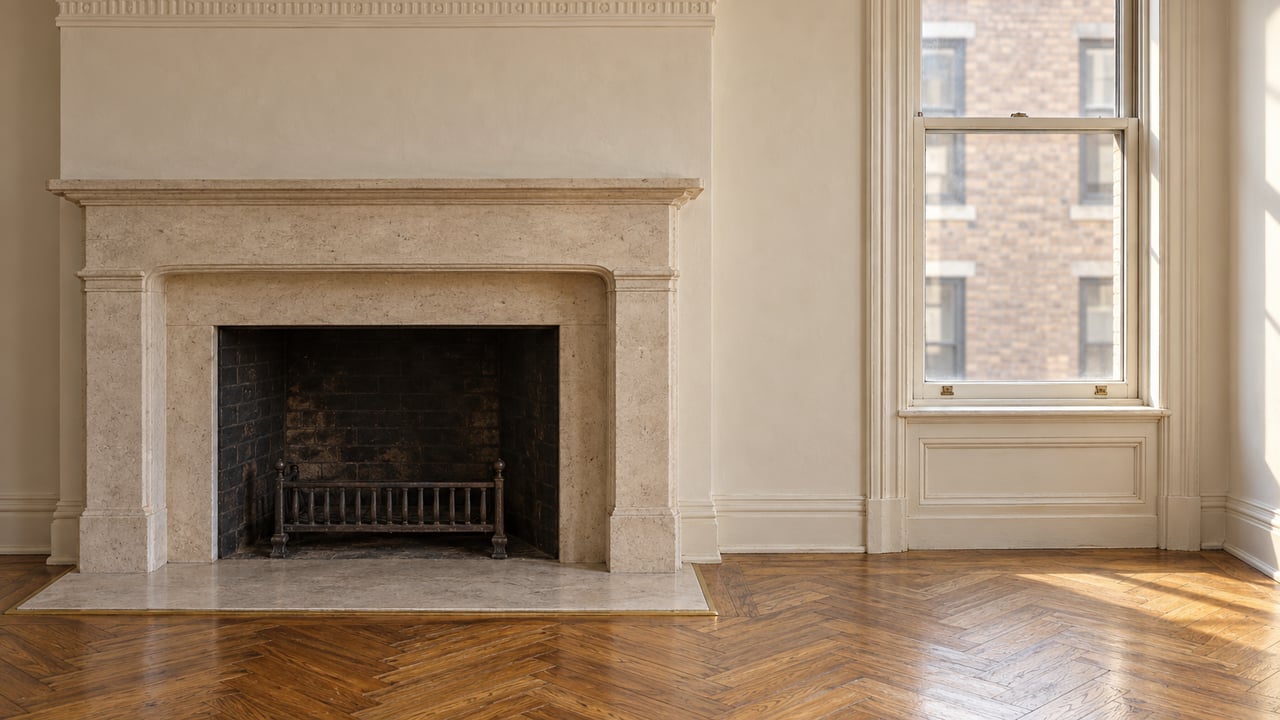
A $45 Million Upper West Side Sale Set a Neighborhood Record—at Nearly Half Its Ask
October 1, 2026
October 1, 2026
As West Side Rag reported, neighbors on West 69th Street complained for years about the construction dust and noise coming from 48-50 West 69th Street, a combined townhouse between Central Park West and Columbus Avenue that had been under renovation since a French businessman and his wife bought the original two buildings in 2011 for $24.5 million. The buildings came down in 2018. What went back up asked $85 million.
In August 2026, it finally sold. The buyer was an entity tied to Brendan Blumer, the CEO of blockchain software company Block.one. The price was $45 million, a residential sales record for the Upper West Side.
That $45 million close sits nowhere near the $85 million ask. Had the property sold anywhere close to that original number, it would have come within $5 million of the all-time New York City townhouse record, a $90 million Upper East Side sale from 2018. Instead it closed at roughly 47 percent below its final asking price, a record for the neighborhood and a steep discount, in the same transaction.
That gap is the story worth sitting with if you're comparing Manhattan neighborhoods right now. A record price and a steep discount happened on the same property, in the same transaction. Both things were true at once, and neither one tells you what you actually need to know about the Upper West Side market unless you look at them together.
An asking price is a claim, not a fact. On a one-of-a-kind property with no recent comparable sales, that claim can drift a long way from what buyers are actually willing to pay, and 48-50 West 69th Street had every reason to drift. It was a custom-combined single-family home of roughly 19,600 square feet with a documented history of construction disputes, sitting in a price tier where there are only a handful of true comparables in the entire city.
What the sale actually demonstrates is that even in a headline-grabbing transaction, on one of the most desirable blocks in the neighborhood, a well-advised buyer negotiated hard and got there. If that's possible at $45 million, it's worth remembering it's possible at $1.4 million too. A record number in a news story and a soft market are not contradictions. They can be the exact same market wearing two different faces.
Zoom out from that one sale and Manhattan's broader numbers tell a similar story about headline figures hiding the more useful number underneath.
Over the three months ending in August 2026, Manhattan's median sale price was $1.3 million, up 1.0 percent from the same period a year earlier. On its own, that reads like a market holding firm. But the median price per square foot over that same window was $1,360, down more than 9 percent year over year, and homes took an average of 73 days to sell compared with 62 days the year before.
A median price can rise while the typical apartment is actually cheaper per square foot. It happens when the mix of what's closing shifts toward bigger, pricier units, pulling the overall median up even as the per-foot value that better reflects what a typical buyer experiences eases. Days on market stretching from 62 to 73 points the same direction: less urgency, more time to negotiate, even while the median sale price headline looks stable to strong.
A separate single-month read on August 2026 activity showed a sharp year-over-year drop in the number of recorded deals, which is more likely a reporting lag for the most recent month than an actual air pocket in demand. It's a useful reminder to treat the newest month of any dataset with some caution and lean on trailing averages when you can.
Here's where the neighborhood becomes genuinely interesting rather than just the site of one dramatic sale. In the second quarter of 2026, the Upper West Side recorded a median sale price of $1.5 million, up 10.7 percent year over year, on 352 closed deals, a 16.2 percent increase in transaction volume from the year before. Median price per square foot reached $1,542, up 9 percent year over year.
That's a neighborhood where price, volume, and per-foot value are all moving in the same direction at once, which is a different and more convincing signal than a single median inching upward while everything underneath it softens. In one week alone, between April 6 and April 12, 2026, Crain's New York Business counted 38 high-priced condo, co-op, and townhouse sales across Manhattan, with the Upper West Side leading that tally.
Part of what's driving it is genuine scarcity rather than sentiment. A Bloomberg analysis projected roughly 51 new Upper West Side condo units coming to market through 2028, a steep drop from the pace of new development the neighborhood saw between 2016 and 2019. When there's almost nothing new being built, existing inventory in good buildings holds its value differently than it would in a neighborhood absorbing a steady stream of new towers. Add in a cash-purchase share across Manhattan that reached record highs in 2025 according to appraiser Jonathan Miller's tracking, and you have a neighborhood where a thinner slice of buyers, often unbothered by financing timelines, is competing for a genuinely shrinking pool of new product.
That's a meaningfully different mechanism than the citywide composition effect. One is noise in the data. The other is real.
When a headline cites a record price, the follow-up question worth asking isn't "is this neighborhood hot?" It's "did the number of transactions and the per-square-foot value move the same direction as the median, or is the median doing all the work by itself?"
On the Upper West Side, right now, they're moving together. That's a more reliable read than the standalone $45 million headline, and it's more useful than Manhattan's borough-wide median, which is currently telling two different stories depending on whether you're looking at total price or price per square foot. If you're weighing the Upper West Side against another Manhattan neighborhood, ask your agent to pull the transaction count and per-square-foot trend alongside the median, not instead of it.
The buy-versus-rent math is shifting too, and it's shifting in a way that adds pressure to exactly this kind of neighborhood comparison. Manhattan's vacancy rate fell to 1.51 percent in August 2026, its lowest point since 2019, with active listings dropping to their lowest August level in eight years, according to Gary Malin, chief operating officer at Corcoran, in comments reported by Brick Underground. Separately, appraiser Jonathan Miller's Real Deal Rental Report put Manhattan's median rent at $4,900 in August 2026, up 6.5 percent year over year, using a different methodology than Corcoran's own $5,285 figure for the same month. The two numbers disagree on the exact dollar amount, but they agree on the direction: rents are elevated, inventory is thin, and the conditions that used to make renting the obvious default for a few more years are getting harder to justify for anyone who's already saved a down payment.
That's the backdrop against which the Upper West Side's real, supply-driven appreciation matters most. A renter watching both a tightening rental market and a neighborhood where genuine scarcity is pushing prices up isn't choosing between a hot deal and a cooling one. They're choosing between two different kinds of tight, and the decision comes down to timeline, not headlines.
Does one record sale reset the comps for my building? Not on its own. A single ultra-luxury townhouse trade tells you about that micro-market, not about a mid-market co-op six blocks away. Ask what happened to deal volume and per-square-foot pricing in your specific building type and price tier before assuming the record moved anything for you.
If rents are this tight, should I just buy now? It depends more on how long you plan to stay and how much cash you're bringing than on the vacancy rate alone. A tight rental market makes the math lean toward buying for people who were already close to that decision. It doesn't erase the need to compare carrying costs, board requirements, and your own timeline against what you'd pay in rent over the same stretch.
If you're trying to figure out what a specific number on the Upper West Side, or anywhere else in Manhattan, actually means for your search or your sale, that's the conversation The Heather Cella Team has every week. Let's Connect.
This article is general information, not legal, tax or financial advice. Consult a qualified professional about your situation.
Stay up to date on the latest real estate trends.


THE HEATHER CELLA TEAM
ADDRESS
110 5TH AVE 6TH FLOOR
NEW YORK NY 10003